Multimedia

2.01 Back to the Moon and Beyond

After over 50 years, humans are returning to the Moon—and NASA is taking that next big leap. Following in the footsteps of the uncrewed Artemis I mission in 2022, Artemis II will not only demonstrate the capabilities of the rocket and spacecraft but also develop our understanding of human sustainability within deep space environments.
Once the spacecraft embarks on its figure-eight trajectory over those next 10 days, the four astronauts will conduct research in collaboration with scientists back...


1.08 New Year, New Moon Rocket with Robert Pearlman

In episode 1.08, join your hosts as they wrap up 2025 with festive fun and look forward to all things space in the new year.
Join Jenna and space historian Robert Pearlman on a walk down memory lane and a hopeful glimpse into the future of space for auld lang syne.
“There’s something to be said for seeing something like that (the moon landing) happen within your lifetime and knowing that at the moment that you’re standing there, there are people on the Moon or people are flying around the Moon,”...

1.07 A Freeze-Dried Turkey Feast and NASA Food Systems

In episode 1.07, join your hosts as they go from food lab to shuttle ‘dining table’ with a retired NASA food scientist and a former Discovery astronaut.
Tune in to a one-on-one chat with Russell and former shuttle astronaut Joan Higginbotham to discuss daily life in space and the steps it took to get there.
In a nutshell, it is a story about perseverance,” Joan said.
“It’s a story about taking advantage of opportunities that come your way.”
Plus, learn how astronauts celebrate Thanksgiving in o...

1.06 Mad Science Tricks and International Treats

In episode 1.06, join your hosts as they get a taste of what’s to come at the fourth-annual Taste of Space: Celebrity Chef Edition on November 15 with two of the highly regarded chefs, Jon Ashton and Jet Tila.
“I’ll be bringing my experiences, my culture, fun stories, and I’ll be cooking food that comes from my repertoire,” Tila said. “To be able to bring that to this event, it’s kind of a full circle moment– you know what I mean? I’ve done a lot of things in my life, a lot of fun cool things, b...

1.05 The Visitor's Guide to the Galaxy

Don’t panic! When you plan your visit to Kennedy Space Center Visitor Complex, we have the resources to make the most of your trip. Are you a space nut or space novice? Partial to rocketry or more of a history buff?
In episode 1.05 join your hosts as they explore how guests can chart their own course at the visitor complex with information agent Livia Buttry and the other friendly faces at the Information counter.
“I’ve met many that have said ‘Oh, I had no idea what you guys had and I fell in...

1.04 We See Stars in Your Future

Fuel tanks prepped? Check. Preflight diagnostics? Check. Gourmet space snacks— vacuum sealed M&Ms for Foreman and cosmic mac and cheese for Ochoa? Check. We’re go for an out-of-this-world evening at Kennedy Under the Stars on August 30.
In episode 1.04, join your hosts as they wonder about our place in the universe with featured astronauts, Mike Foreman and Ellen Ochoa, who will be attending the highly anticipated after-hours event.
“I always say the second best thing about being an astronaut is...

1.03 One Man's Scraps is Another Man's Artifact

When project manager Richard Bahorich took on his latest development from across the crawlerway, a dull, new-to-him hunk of metal caught his eye.
“I went over there one day and I said ‘Hey you don’t know me but…I’d love to put a piece of this mobile platform on display.’ Two days later, I have this two-and-a-half ton piece of metal here.”
Planted within the courtyard, the Apollo 11 mobile launch platform is one of many upcycled artifacts and interactives that stud the newly renovated Gantry at L...

1.02 We Are Made of Star Stuff - and Steel Beams

It’s not rocket science, but it does take some strategic planning and creativity to pull off a grand opening for the now and next of NASA.
For Chief Operating Officer, Therrin Protze, tethering a near 230-foot-tall rocket to the ceiling and blazing skyward jets overhead was the only logical option in carrying out his vision for Gateway: The Deep Space Launch Complex ®.
“I think the highlight was watching the F104s fly right over. I’ll never forget the owner looking at me and he goes ‘I can see h...

1.01 Kennedy here. The Podcast Has Landed

“When you look down at the earth you can see just how fast you’re actually moving… When you actually view that from space, then it really takes on a whole new dimension.”
Recorded from the very launch site that propelled the U.S. space program, join our hosts as we dive into the past, present and future of space exploration. From captivating experiences to engaging astronaut encounters, explore space like never before on “We Choose to Go to Kennedy”, the official podcast of Kennedy Space Center...

The science of Europa Clipper and research from the red planet

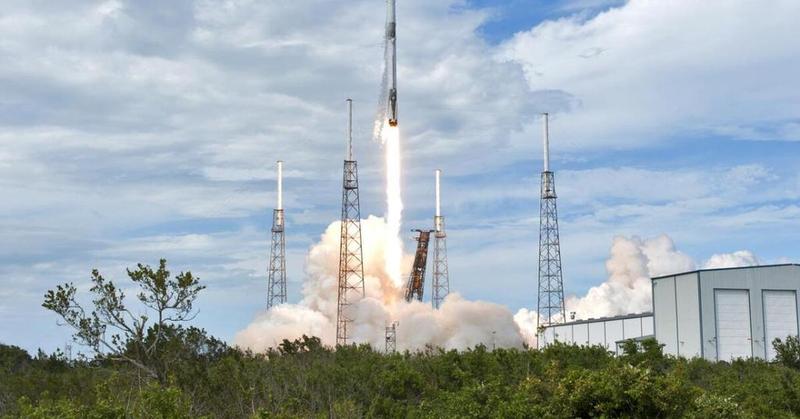
Following its launch on Oct. 14, Europa Clipper is embarking on its long journey to explore Jupiter’s moon and determine its potential habitability.Once the spacecraft reaches Jupiter’s orbit, it will perform 49 successive flybys furthering our understanding of the moon’s geophysical and geochemical properties.Paul Byrne, associate professor of Earth, environmental and planetary sciences at University of Washington in St. Louis, said that life requires three things: water, some sort of organic c...

Cosmic creeps and black hole heartbeats

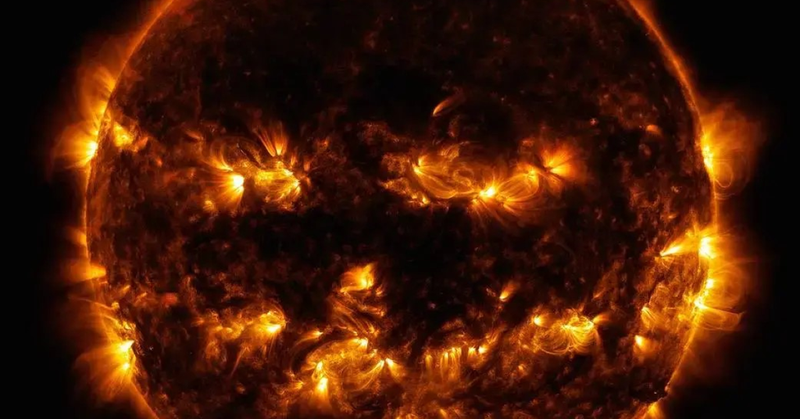
The moon may disappear into the dark night sky, the stars engulf one another, and comets may scatter our inner solar system.Josh Colwell, UCF Pegasus Professor and co-host of the podcast Walkabout the Galaxy, explores the disturbing cosmic entities that dwell within our universe.Each year, the moon recedes 3.8 centimeters from our Earth, caused by a tidal interaction. From this interaction, the moon takes away bits and pieces of Earth’s angular momentum, slowing Earth’s rotation and slowly drift...

Starship's big catch and Hubble's deep look

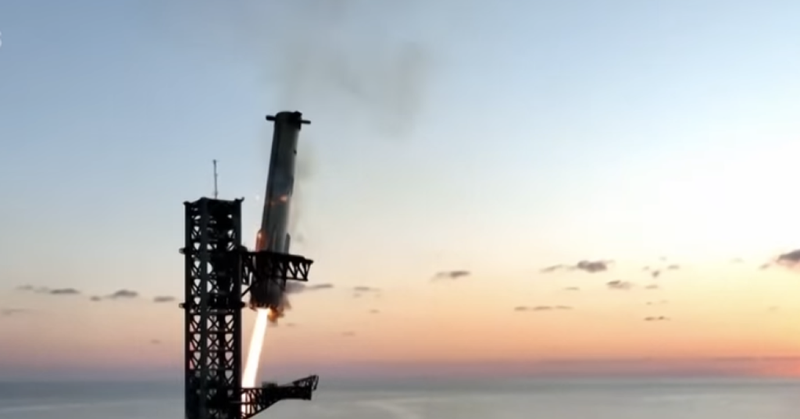
SpaceX pulled off a complex mid-air maneuver on Oct. 13, not just by launching, but catching its Super Heavy rocket booster with the large mechanical “arms” of the launch tower at Starbase in south Texas.The goal of the fifth test flight of Starship aimed to demonstrate reusability of the first stage of the rocket. Eric Berger, author and senior space editor at Ars Technica, said that from an engineering standpoint, the precision from the flight algorithms and execution of the catch is astoundin...

Research endeavors on the space station and exploring an ocean world

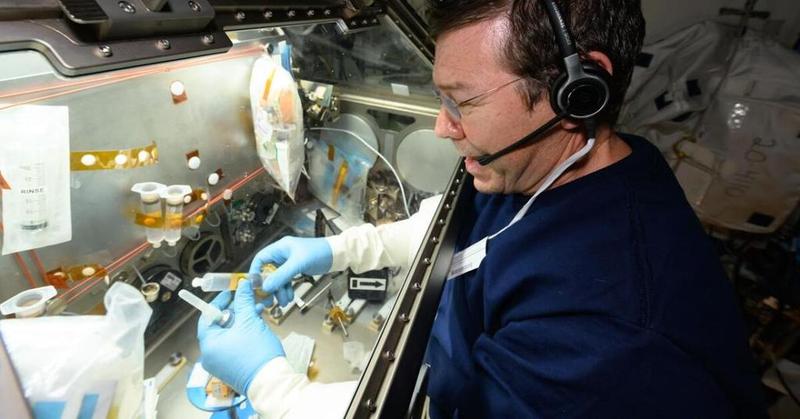
Space science research opportunities are growing through open solicitation aboard the International Space Station, which currently hosts hundreds of experiments for this next operational crew.The ISS National Lab was created to offer a wide range of scientific experimentation, STEM education opportunities and technology research from the unique vantage point on the orbiting lab.Ryan Reeves, director of science and technology at the ISS National Laboratory, said the experiments focus on improving...

SpaceX’s past and future. Plus, a Florida scientist’s journey to space

In its existence of a little over two decades, SpaceX has made a name for itself in the space exploration industry, but the company didn’t always have that reputation.Space editor and journalist, Eric Berger, walks through pivotal moments in SpaceX history and what’s to come in his new book, Reentry: SpaceX, Elon Musk, and the Reusable Rockets that Launched a Second Space Age. Berger explores that despite a “scrappy start” 10 to 15 years ago, SpaceX shocked its competitors with its accomplishmen...

NASA’s strategies for space exploration and menstrual cycles in space

From crewed mission to science on the International Space Station, NASA has played a key role in space exploration.But a lot of planning and research goes into space travel and as the space station nears retirement, NASA, commercial partners and international partners have worked together to create objectives and goals in a new Low Earth Orbit Microgravity Strategy plan.NASA’s plan outlines goals in science fields and highlights agendas for things like international cooperation, research, public...

Let's get social